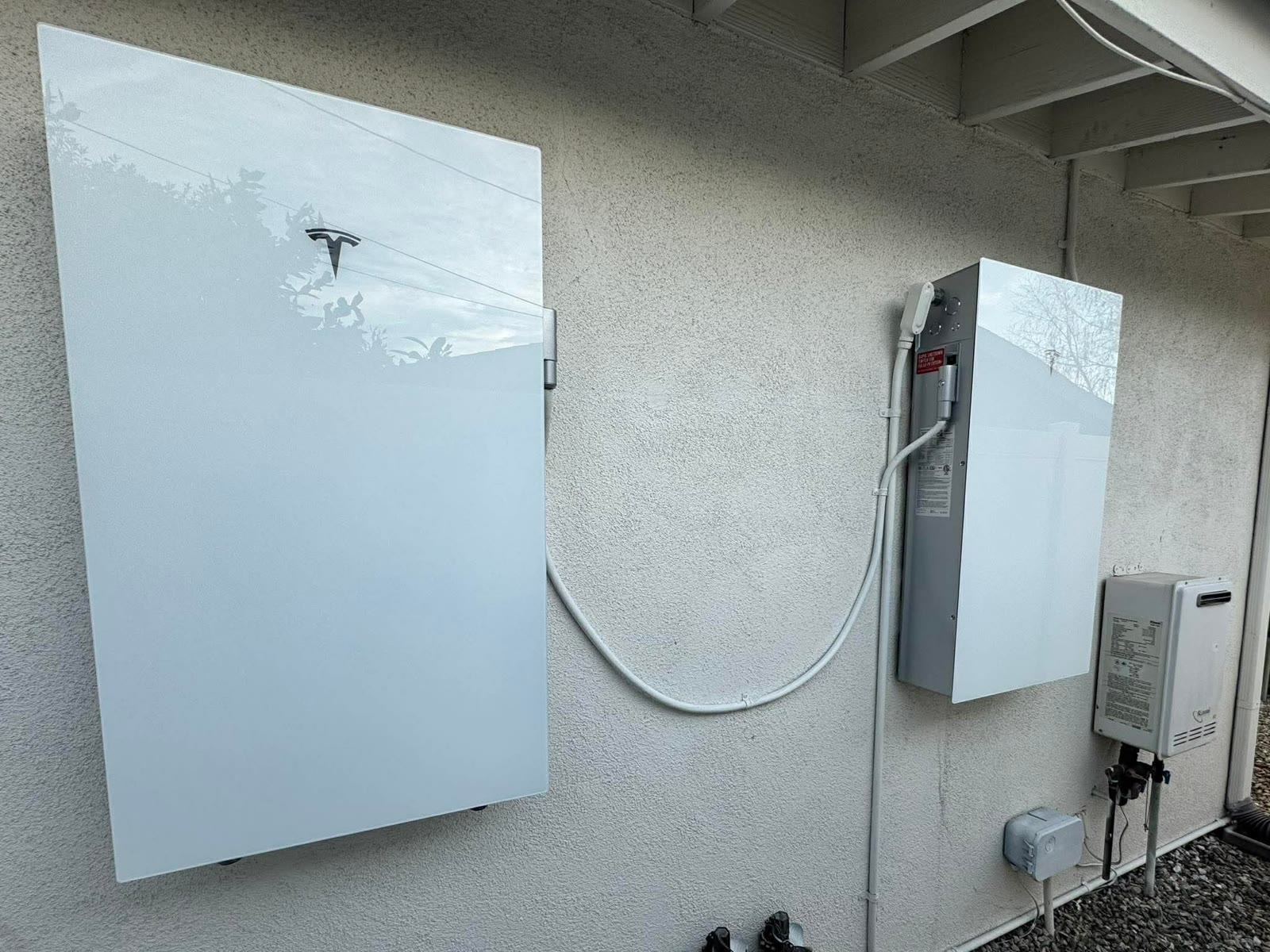
Battery storage · Tesla Powerwall
VertX designs and manages Tesla Powerwall 3 installations for homes across the San Gabriel Valley, Los Angeles County, Orange County, and the Inland Empire, with the install done by Tesla Certified crews. A Powerwall keeps the lights on through rolling blackouts and PSPS shutoffs, and under NEM 3.0 it is the piece that makes solar savings actually work.
Two things changed. First, NEM 3.0: the grid now pays a fraction of retail for the solar you export, so storing your midday production and using it at night beats selling it cheap and buying it back expensive. Second, the grid itself: California has already resorted to rolling blackouts when heat waves strain the grid, and fire-season safety shutoffs mean Southern California homeowners lose power more often than they used to.
A right-sized battery answers both: it shifts your solar to when you need it and keeps the essentials running when the street goes dark. That's energy independence you can actually measure, on your bill every month and at your breaker panel during the next blackout.
We quote the Tesla Powerwall 3 first because it earns the spot. One unit stores 13.5 kWh and delivers up to 11.5 kW of continuous power, and the solar inverter is built in, so a new solar-plus-battery system needs one piece of equipment on the wall instead of two. You watch production and backup status in the Tesla app, Storm Watch charges the battery automatically ahead of severe weather, and the whole thing carries Tesla's 10-year warranty. Need more capacity later? Powerwall stacks: add units up to whole-home coverage.
Every Powerwall we sell is installed by Tesla Certified crews, with VertX managing design, permits, and utility paperwork as one project.
Monitoring · Tesla app
Once the Powerwall is on, the whole system shows up in the Tesla app: what the panels are producing right now, what the house is using, how full the battery is, and whether you are pulling from the grid or sending power to it. No separate hardware, no second app.
We retrofit Powerwall onto systems we didn't install, too. If another company put in your panels, we'll evaluate the inverter setup and quote the cleanest integration path.
Tesla, Powerwall, and related marks are trademarks of Tesla, Inc. VertX is an independent company and is not affiliated with or endorsed by Tesla, Inc.
Where we do this
Each city has its own page: the utility, the permit path, fire-zone status, and the kind of homes we see there.
Common questions
A single Tesla Powerwall 3 stores 13.5 kWh and delivers up to 11.5 kW of continuous power: enough to back up the essentials (refrigerator, lights, internet, garage door, medical equipment) for a day or more, with enough starting power for most central AC units. Whole-home backup is possible by adding units. We size it to what you actually need to protect.
Installation is performed by Tesla Certified installer crews, and VertX manages the whole project: quote, permits, utility paperwork, schedule, and questions all run through us from start to finish.
It is our default recommendation and what most of our customers choose, but we are not locked to one brand. If your system design, backup goals, or budget point to a different platform, we will say so and quote that instead.
Sometimes. It can charge cheap overnight and discharge during expensive evening hours, and it still provides outage backup. But paired with solar under NEM 3.0 is where the economics genuinely work.
Incentive programs change frequently. California has run SGIP rebates and utilities have their own programs. We check what applies to your address at quote time and put it in writing.
Tesla warrants the Powerwall 3 for 10 years, and it is built to cycle every day for that whole period. Like any battery it loses some capacity over time, and the warranty guarantees a minimum retained capacity at the end of the term. Most owners see it as a 10-to-15-year piece of equipment, similar to a water heater or an AC condenser.
The installation itself is usually a single day. What takes longer is the city permit and the utility approval to operate, which vary by city and by SCE's queue. We handle both and keep you posted.
Yes. We retrofit Powerwall onto systems other companies installed. We look at your existing inverter and system size first, because that decides the cleanest way to wire it in and how much backup you will actually get.
Usually on an exterior wall near your main electrical panel, or in the garage. It is rated for outdoor use and Southern California heat, and it needs clear space for airflow and service access. We pick the spot with you during the on-site assessment.
On a time-of-use plan, yes. The battery charges from your solar, or from the grid at cheap overnight rates, and runs the house during the expensive 4 to 9 pm window, so you buy less power when it costs the most. How much it saves depends on your usage and rate plan, which we model before quoting.