Solar · Our flagship
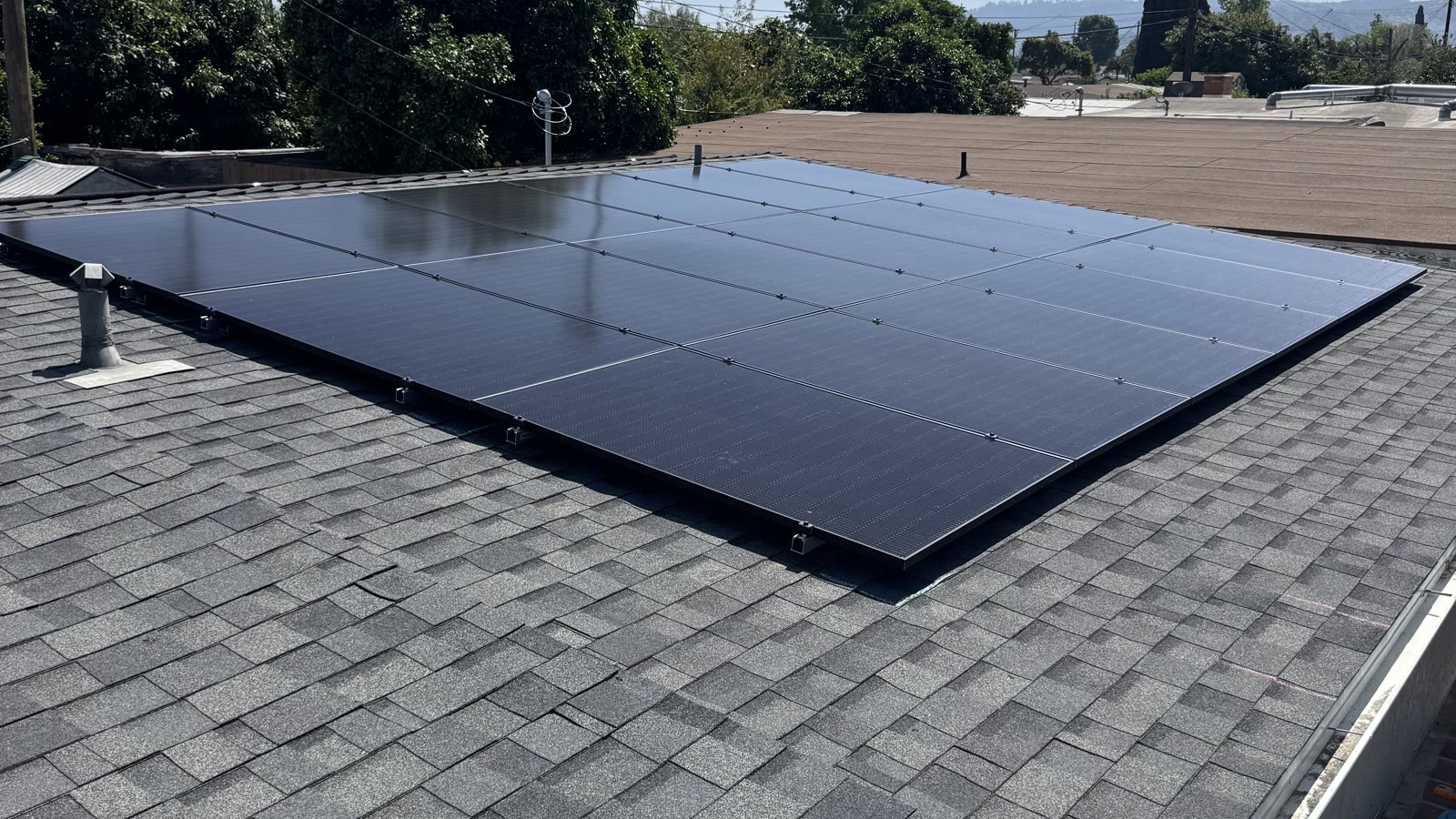
VertX designs, permits, and manages home solar installations from our office in West Covina, serving the San Gabriel Valley, Los Angeles County, Orange County, and the Inland Empire. Every system is sized to your real usage and your SCE rate plan, because under NEM 3.0 that is what decides whether solar pays off.
Every solar company buys panels from the same handful of manufacturers. What separates a system that wipes out your bill from one that disappoints is the design: how it's sized against your real usage, how it handles shade, and how it plays with your utility's NEM 3.0 rates.
Under NEM 3.0, the grid pays very little for the power you export, so the old "cover the roof and sell the extra" playbook is dead. We size systems to what your home actually consumes, design for battery pairing so your evening usage runs on your own stored power, and model your specific SCE rate plan before you sign anything.
We install panels from three manufacturers: Qcells, REC, and Silfab. We are not tied to any one of them. The design decides the panel, and we show you the datasheets side by side before you sign.
If American-made matters to you, Qcells and Silfab both let us build the whole array that way. Every panel we install carries a long manufacturer product and performance warranty, on top of VertX's 25-year workmanship warranty.
Southern California is full of tile roofs, and tile is where inexperienced solar crews do the most damage: cracked tiles, botched flashing, leaks that show up two winters later. Because roofing is half of VertX's business, tile jobs get planned right: proper double-flashed penetrations, replaced tiles from matching stock, and a roof and array treated as one project instead of two competing trades.
Under NEM 3.0 a battery is usually what makes the math work, and it keeps the lights on through rolling blackouts and PSPS shutoffs: real energy independence, not just a lower bill. For most homes we recommend the Tesla Powerwall 3. See battery storage, or ask for a quote with and without one; we'll show you both numbers.
Where we do this
Each city has its own page: the utility, the permit path, fire-zone status, and the kind of homes we see there.
Common questions
Yes, but only when the system is designed for it. NEM 3.0 pays much less for power you export to the grid, so modern systems are sized to match your actual usage and usually paired with a battery so you use your own power at night instead of selling it cheap. That is exactly how we design every system.
Most residential systems we install land in a wide range depending on size, roof type, and whether a battery is included. We put an exact number in writing after a free on-site assessment, and unlike most quotes, ours includes the true condition of your roof, so there are no surprise change orders later.
VertX manages both sides of that job. If your roof has less life left than your panels, we will show you, price the roof and system together, and build in the right order: roof first, array second, as one project.
All of it: city permits, utility interconnection, and permission-to-operate. You sign, we file, and we keep you updated until the system is on.
Installation is performed by licensed, insured crews that VertX vets and works with project after project. Your quote, your permits, your schedule, and your questions all run through VertX from start to finish.
For most homes on SCE rates, yes, as long as the system is designed for NEM 3.0 and usually paired with a battery. Rates keep climbing, and a battery lets you run your evenings on your own stored power instead of buying it back from the grid during the most expensive hours. Incentives change year to year, so we check what applies at your address and put the full number in writing before you sign anything.
Under NEM 2.0 you got close to full retail credit for every kilowatt-hour you exported, so a big system paid off fast. NEM 3.0 credits exports at the utility's avoided cost, which is a fraction of retail for most of the day. Payback now depends on using your own production, which is why we size to your actual consumption and design for a battery instead of oversizing the array.
The work on your roof usually takes a few days. The longer waits are the city permit and the utility's permission to operate, which vary by city and by SCE's backlog. We handle both and tell you where things stand at each step.
In California, your HOA cannot stop you from installing solar. State law limits HOAs to reasonable conditions that do not significantly raise the cost or cut the output of the system. Most HOAs still want an application showing the layout, and that is part of the paperwork we handle.
Without a battery, a grid-tied system shuts off in an outage. That is required by code so it cannot push power onto lines crews are working on. With a Powerwall, the house disconnects from the grid and your panels keep charging the battery through the day. If backup matters to you, that is the reason to pair the two.