Guide · Roofing and solar
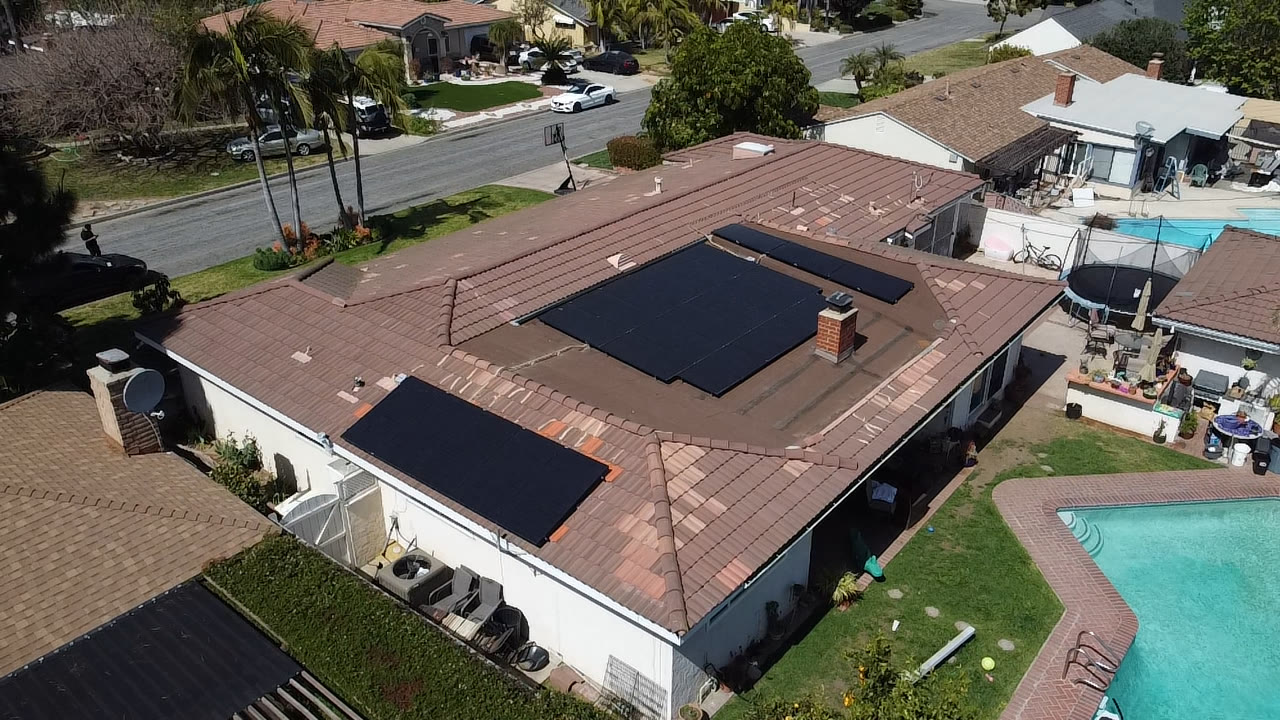
Tile roofs take solar well, but only when the mounts are flashed into the underlayment beneath the tile, the tile is cut or replaced around each mount instead of drilled and caulked, and the crew walks the roof without cracking it. Most tile leaks after solar trace back to those three things. If the tile is 25 years old or more, the underlayment under it is usually the bigger question than the tile itself.
Facts checked September 21, 2026
Walk any hillside tract in Walnut, Diamond Bar, San Dimas, La Verne, or the Glendora foothills and most of the roofs are concrete tile. Those neighborhoods were built in a wave from the mid-1970s through the 1990s. The median Walnut home dates from 1982 and nearly half of the city's housing went up in that one decade; Diamond Bar's median is 1980. Concrete tile was the standard roof on that generation of two-story tract homes, and it is still up there, which is the point: tile lasts.
The tile is also why those roofs are where inexperienced solar crews do the most damage. A composition shingle roof forgives a lot. Tile does not.
There are two accepted ways to mount solar on tile, and both keep the waterproofing in the underlayment layer where it belongs.
| Method | What happens at each mount | When it is used |
|---|---|---|
| Flashed standoff with tile cut or replaced | The tile at the mount is lifted, a metal flashing is installed over the underlayment and lapped under the course above, the standoff bolts to the rafter through the flashing, and the tile is cut to fit around it or replaced. | Most concrete and clay tile roofs in good condition. |
| Tile-replacement mount | One tile is removed and replaced with a metal or composite piece shaped like the tile that carries the mount and flashes into the underlayment. | Profiles where cutting tile is impractical, or when the homeowner wants no cut tile. |
Around the mounts, the details that separate a clean job from a callback:
If the tile is original to a 1970s or 1980s house, assume the underlayment is on borrowed time until someone looks. Brittle, cracked, or bare felt under the tile means the right order is a lift-and-relay first: the tile comes off and is stacked, new underlayment and flashings go on the deck, and the same tile goes back with the solar mounts flashed in as part of the new roof. It costs more than solar alone this year, and less than solar now plus removing and reinstalling the array in a few years.
The LA County reroofing code manual assumes exactly this sequence for homes that already have panels: the array comes off, the roof is redone, and the array goes back on with the mounts reflashed. Doing the roof first avoids paying for that round trip.
A solar-only company subcontracts or skips the roofing questions, because checking the roof risks losing the sale. When roofing is half of what a company does, the tile inspection is a normal first step, the crew has flashed hundreds of tile penetrations, matching tile is a stocking problem it solves every week, and there is one warranty on the roof and the array instead of two companies pointing at each other. That is how VertX approaches tile: the roof and the array are one project, and the same company is responsible for both. The roof and solar bundle page explains how the pricing and permit work when both are needed.
Clear answers to all four mean the crew has done tile before. Vague answers mean your roof is where they will learn.
Common questions
Yes. Concrete and clay tile roofs carry solar all over the San Gabriel Valley. The tile is not the problem. The problem is crews that treat tile like shingle: walking anywhere, drilling through the tile, and sealing the hole with caulk. Done right, the mount is flashed into the underlayment beneath the tile and the tile is cut or replaced around it, and the roof is as tight as it was before.
Almost always because of the penetrations. A mount that was drilled through the tile and caulked, or lag-bolted without a flashing under the tile course above it, lets water track down the underlayment and into the deck. The leak usually shows up one or two rainy seasons later, after the installer's attention has moved on. Cracked tiles from foot traffic are the other cause, and those can be anywhere on the roof, not just under the array.
If the tile is 25 to 30 years old and the underlayment is original, usually yes. Tile lasts far longer than the felt or synthetic membrane under it, and that membrane is what actually keeps water out. Re-underlaying is a lift-and-relay: the tile comes off, new underlayment and flashings go on, the same tile goes back. Doing it before the array goes on avoids paying to remove and reinstall the panels later.
Every tile job breaks some tile, and a good crew brings matching stock or sources it before the job. Discontinued profiles can be matched through tile salvage yards, or the crew can pull matching tile from a hidden slope and use the odd ones there. Mismatched tile scattered around an array is a sign the crew did not plan for breakage.
Four questions. How will the mounts be flashed, and can I see a photo of one on a tile roof you have done? Who replaces the tiles you break, and with what? Will you inspect the underlayment first, and what happens if it is at the end of its life? And if the roof leaks under the array in year five, who fixes it? A company that does its own roofing has clean answers to all four.